
When most people try to lose weight, they watch one number: the scale. But not all weight loss is...
Can You Estimate How Much Weight You Will Lose?
By: Scottsdale Weight Loss Center
Published: February 11, 2019

Please Don’t Drink Your Calories if You’re Focused on Weight Loss
Liquid calories are fluids consumed as part of your daily diet that often go unnoticed and...
Rock Climbing: Lose Weight on the Wall
If your weight loss efforts have hit a wall, why not climb it? Rock climbing is becoming an...
Weight Watchers vs. Medical Weight Loss Programs in Scottsdale: Comparing the Results
Many residents in Scottsdale, Phoenix, and Glendale struggle with weight loss plateaus despite...
Arizona Medical Weight Loss Programs vs Online Programs: Which One Provides the Best Results?
The weight loss landscape has shifted significantly with the rise of digital health platforms....
Is Brown Rice Healthier Than White Rice?
Is brown rice better than white rice? Intuitively, one would think that brown rice is much...
Can you know in advance how much weight you will lose in a given amount of time? If you have a wedding dress or a swimsuit to fit into by summer, for example, can you know if you will lose the weight that you desire in the time that you have?
Weight loss isn’t an exact science. From genetics to nutrient intake, sleep quality and stress levels, there are many factors that play a role in determining how much weight you lose. You can, however, make an educated guess or a guesstimate to arrive at a rough timeframe for the weight you hope to lose.
How do you figure out how much you can lose?
The most common way in which to determine your weight-loss timeframe is to start by looking at your calorie burn rate while at rest. You can ask your doctor to run an RMR test that measures how much oxygen you exhale in a given amount of time and calculates how many calories you must use up while at rest. On average, women burn up 1500 calories over the day; men burn 1700 calories.
Once you know how many calories you burn while at rest, all you need to do is to take fewer calories than the number you have.
Working out a timeframe
In general, burning 3500 calories equals losing a pound of fat. To lose three pounds of fat over the first week is a realistic goal for those who work out. After this initial surge, weight loss rates drop to about one pound a week.
After eight weeks of working out and losing weight, it’s usually a good idea to schedule a second RMR test. If you have lost some weight, your at-rest calorie burn rate should drop, as well. You can then recalculate your weight-loss speed.
The smaller you are, the less energy you expend while at rest. For this reason, as you continue to lose weight the next several months, your rate of weight loss will drop. You will continue to become healthier, however. In general, everyone has a different burn rate and ability to lose weight. While it can be very hard to put an exact number on it, planning on a pound a week is realistic for those who eat responsibly and work out with reasonable intensity. If you need more exact figures than that, it would require far more testing.

Nick
Nick's Story
"I wish I would have come here first. We spend all our time reacting to the next great weight loss tip or program. It might work for a while, but does not last and we end up yo-yoing from one fad to the next – as we gain more weight." Read More

Gina
Lost 44.5 lbs
"I had no trouble adhering to the meals and they really helped catapult my progress! The classes were so beneficial to me because they helped change my thinking about how I viewed health, nutrition, and fitness.
I will always have my relationship with Scottsdale Weight Loss Center. They truly helped me change my life forever." Read More
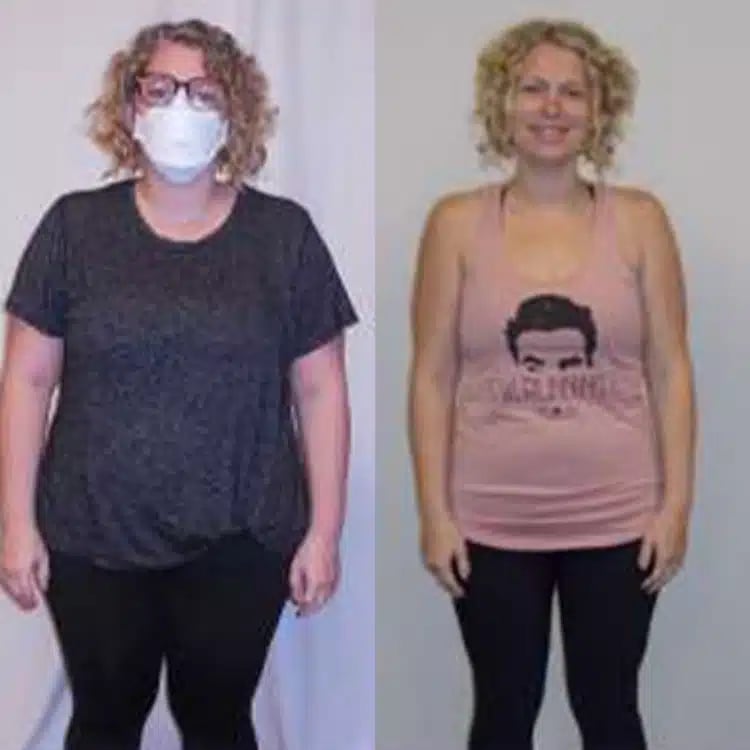
Lauren
Lost 60 lbs
"Dr. Ziltzer and everyone who I have come in contact with at the Scottsdale Weight Loss office have been so encouraging and I look forward to seeing them each week. It is now a year and 2 months later since I started. I am down 60 lbs., which is the average amount a 9-year-old weighs, it is crazy to think I lost a whole person! I feel amazing, I hit my goal weight in November 2021 just before Thanksgiving. Nothing on my body hurts anymore..." Read More
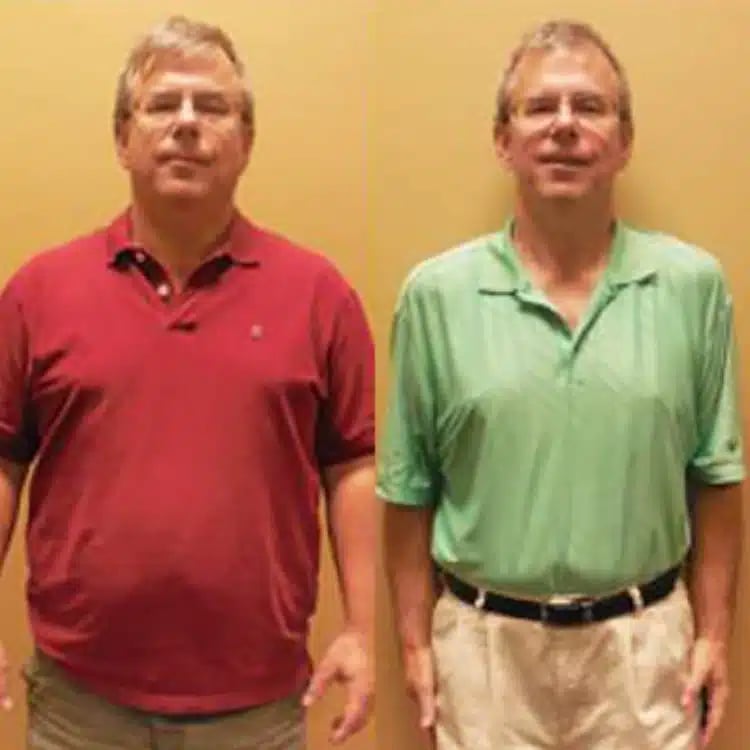
Chuck
Lost 66 lbs
"The best thing I did was call the Scottsdale Weight Loss Center. I have a lot more energy, I'm not hungry, and it feels great.
You can take it from me that this is a program that produces results. The staff is always positive, supportive, and never judgmental.
Your visits always result in positive reinforcement, no matter if you had a good week or a bad week." Read More

Emily
Lost 101 lbs
"Here I am at the lowest I have been since high school weighing in at 155lbs. I have lost 101 lbs, BMI of 39 when I started, to 21.6, and of course at body fat % of 47.1 to 26.5%. I told myself by my 30th birthday I wanted to be confident in the way I look and I owe it all to SWLC. The entire staff is so welcoming and they are rooting for you just as much as you are rooting for yourself...." Read More
Reviews



Meet Our Team

Robert Ziltzer, MD, FACP, FAAP, FOMA
Obesity Medicine Certified Physician

Diana Bone, FNP-C
Specializing in Obesity Medicine

Craig Primack, MD, FACP, FAAP, MFOMA
Obesity Medicine Certified Physician

Kristen Ash, FNP-C, FNP-BC
Nurse Practitioner

Alicia Earley, FNP-C
Family Nurse Practitioner
