
When most people try to lose weight, they watch one number: the scale. But not all weight loss is...
Don’t Underestimate Sleep in Weight Loss
By: Scottsdale Weight Loss Center
Published: January 24, 2019

Please Don’t Drink Your Calories if You’re Focused on Weight Loss
Liquid calories are fluids consumed as part of your daily diet that often go unnoticed and...
Rock Climbing: Lose Weight on the Wall
If your weight loss efforts have hit a wall, why not climb it? Rock climbing is becoming an...
Weight Watchers vs. Medical Weight Loss Programs in Scottsdale: Comparing the Results
Many residents in Scottsdale, Phoenix, and Glendale struggle with weight loss plateaus despite...
Arizona Medical Weight Loss Programs vs Online Programs: Which One Provides the Best Results?
The weight loss landscape has shifted significantly with the rise of digital health platforms....
Is Brown Rice Healthier Than White Rice?
Is brown rice better than white rice? Intuitively, one would think that brown rice is much...
Very few people get the 7 hours of sleep required for optimal health. They likely do not understand how sleep deprivation is affecting their health. As healthcare providers, we have an opportunity to make a significant impact in our patients’ lives without prescribing medications. In many people sleep deprivation occurs simply because they get to sleep too late. We refer to this as “voluntary insomnia,” as contrasted by people who want to get more sleep but either cannot get to sleep or awaken frequently through the night. We’ll discuss solutions to these problems in future posts.
Inadequate sleep causes
Numerous health problems including insulin resistance and diabetes and obesity.
Elevated ghrelin levels. Ghrelin is produced in the stomach and and raises hunger at the level of the hypothalamus.
Lower levels of leptin, increasing body fat. Leptin is made in fat cells, and raises metabolism while lowering appetite.
Elevated levels of cortisol, resulting in central fatty deposition.
Elevated levels of insulin, resulting in fat building.
Research
A study assessed the basal metabolic rates of sleep deprived individuals. Volunteers spent a day in an insulated room, with normal sleep (at least 7 hours) and their calorie output was measured. Next, their calorie output was measured on a day when they were then allowed to sleep for only 4 hours. The result as that in the sleep deprived state, total energy output was 400 calories lower. That is the equivalent of running 4 miles!
Voluntary insomnia is solved by educating patients on the effect they may be suffering from lack of sleep, and assessing their motivation to change. Some may choose not to increase sleep time, but for those who wish to improve their health without medications, setting a hard stop bedtime is a sure way to do so.
Why Sleep is Important for Weight Loss

Nick
Nick's Story
"I wish I would have come here first. We spend all our time reacting to the next great weight loss tip or program. It might work for a while, but does not last and we end up yo-yoing from one fad to the next – as we gain more weight." Read More

Gina
Lost 44.5 lbs
"I had no trouble adhering to the meals and they really helped catapult my progress! The classes were so beneficial to me because they helped change my thinking about how I viewed health, nutrition, and fitness.
I will always have my relationship with Scottsdale Weight Loss Center. They truly helped me change my life forever." Read More
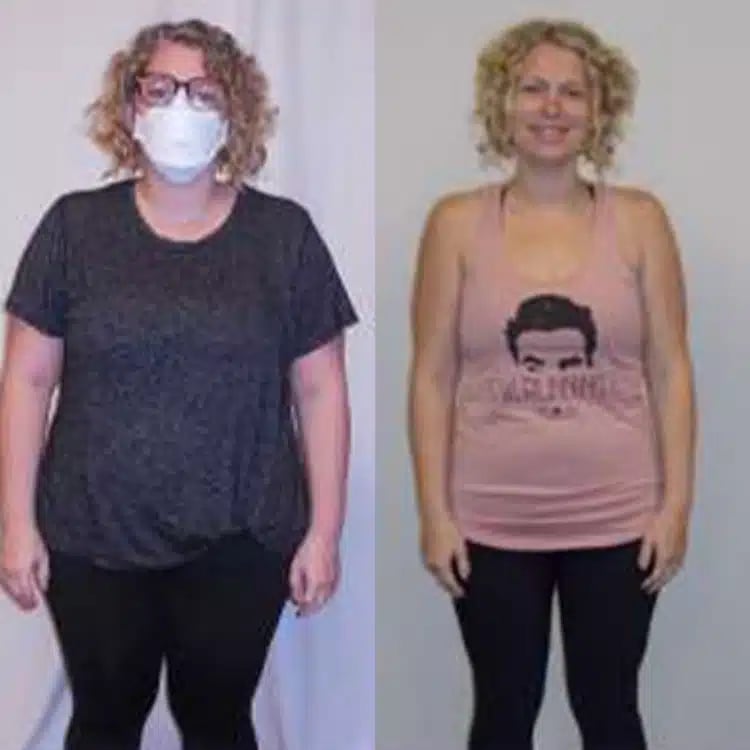
Lauren
Lost 60 lbs
"Dr. Ziltzer and everyone who I have come in contact with at the Scottsdale Weight Loss office have been so encouraging and I look forward to seeing them each week. It is now a year and 2 months later since I started. I am down 60 lbs., which is the average amount a 9-year-old weighs, it is crazy to think I lost a whole person! I feel amazing, I hit my goal weight in November 2021 just before Thanksgiving. Nothing on my body hurts anymore..." Read More
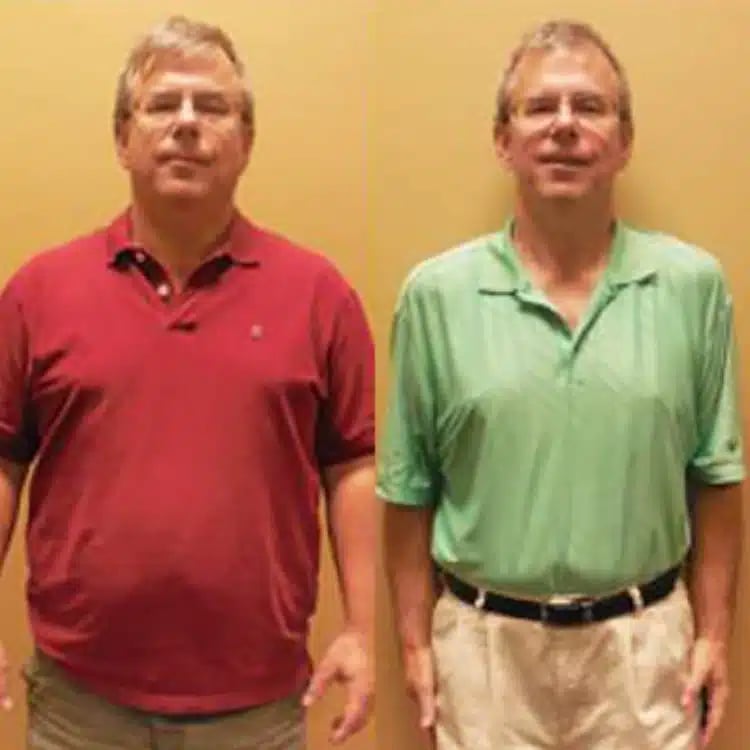
Chuck
Lost 66 lbs
"The best thing I did was call the Scottsdale Weight Loss Center. I have a lot more energy, I'm not hungry, and it feels great.
You can take it from me that this is a program that produces results. The staff is always positive, supportive, and never judgmental.
Your visits always result in positive reinforcement, no matter if you had a good week or a bad week." Read More

Emily
Lost 101 lbs
"Here I am at the lowest I have been since high school weighing in at 155lbs. I have lost 101 lbs, BMI of 39 when I started, to 21.6, and of course at body fat % of 47.1 to 26.5%. I told myself by my 30th birthday I wanted to be confident in the way I look and I owe it all to SWLC. The entire staff is so welcoming and they are rooting for you just as much as you are rooting for yourself...." Read More
Reviews
Meet Our Team

Robert Ziltzer, MD, FACP, FAAP, FOMA
Obesity Medicine Certified Physician

Diana Bone, FNP-C
Specializing in Obesity Medicine

Craig Primack, MD, FACP, FAAP, MFOMA
Obesity Medicine Certified Physician

Kristen Ash, FNP-C, FNP-BC
Nurse Practitioner

Alicia Earley, FNP-C
Family Nurse Practitioner
